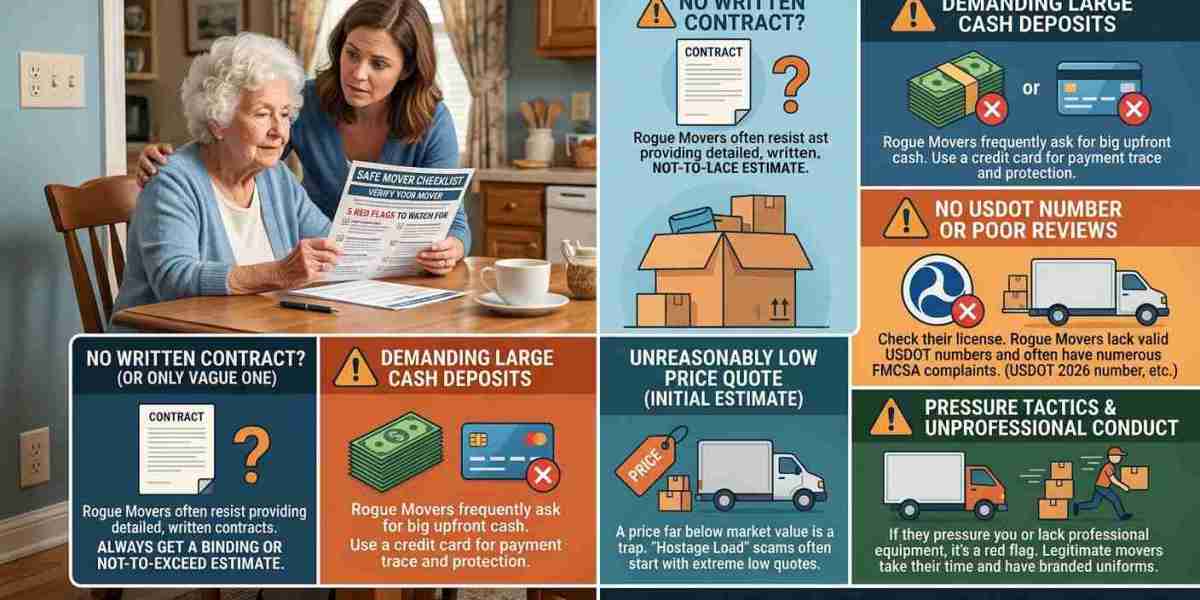

Moving later in life can represent an exciting new chapter, but it can also involve complicated financial and logistical decisions. An older adult may be downsizing a longtime home, relocating closer to family, moving into a retirement community, or arranging an interstate move after decades in one place.
Unfortunately, dishonest movers and brokers can take advantage of customers who are dealing with tight deadlines or unfamiliar moving procedures.
Recognizing Senior Moving Scams before signing a contract can help families protect money, household belongings, and peace of mind. For interstate moves, federal consumer protections establish requirements involving estimates, mover and broker registration, moving documents, liability, and other aspects of the process.
Here are the moving scam red flags seniors and their families should never ignore.
Why Seniors and Families Should Watch for Moving Fraud
Moving scams can affect anyone. Older adults, however, may be managing several major tasks simultaneously.
A senior might be dealing with:
- Selling a home
- Downsizing decades of possessions
- Coordinating family assistance
- Arranging transportation
- Choosing senior housing
- Packing valuable or sentimental belongings
- Signing unfamiliar contracts
- Managing multiple service providers
A dishonest mover may try to exploit confusion or urgency.
Families can help by becoming involved before a company receives money or takes possession of household goods.
Red Flag: The Company Gives an Estimate Without Properly Assessing the Move
One of the earliest warning signs can appear during the estimate process.
Be cautious when a company provides a confident moving price without adequately assessing the household goods.
An interstate mover needs an accurate understanding of what will be transported. Federal consumer guidance advises customers to make sure an estimate is based on an actual or virtual inspection of the household goods.
The assessment should account for belongings such as:
- Furniture
- Appliances
- Boxes
- Garage contents
- Storage items
- Outdoor furniture
- Specialty belongings
An estimate based on incomplete information can increase the likelihood of disagreements later.
Red Flag: There Is No Written Estimate
A verbal quote should never replace the required written estimate for an interstate move.
The estimate should clearly describe applicable charges for the services the mover will perform.
Before accepting it, review:
- Company information
- Transportation services
- Packing services
- Additional services
- Shipment details
- Estimate type
- Liability information
Families should compare written estimates from multiple companies rather than selecting a mover solely because one salesperson offers the lowest price.
An unusually cheap quote deserves additional questions.
Red Flag: The Company Says the Final Price Comes After Loading
This warning sign deserves particular attention.
Once household goods are loaded onto a truck, the customer has considerably less practical control over the situation.
Federal consumer guidance identifies a mover or broker saying it will determine the cost after loading as a fraud warning sign.
Before loading begins, the customer should understand the estimate and how charges will be calculated.
If something about the shipment has legitimately changed, address it before the mover takes possession of the belongings.
Red Flag: A Large Upfront Deposit or Cash Demand
A demand for cash or a large deposit before the move is another warning sign identified in federal moving-fraud guidance.
Before paying a deposit, ask:
- What is the payment for?
- Is it refundable?
- What is the cancellation policy?
- When is the remaining balance due?
- Which payment methods are accepted?
- Are payment terms included in the agreement?
Do not let a salesperson rush an older adult into making an immediate payment simply because a supposedly discounted rate or moving date is about to disappear.
Verify the company first.
Red Flag: Someone Asks the Senior to Sign Blank Documents
Never sign blank moving paperwork.
Federal consumer guidance specifically warns customers against this practice because moving documents can be legally enforceable contracts.
A dishonest operator could potentially fill blank spaces later with terms the customer never knowingly approved.
Before signing, review information involving:
- Services
- Charges
- Dates
- Company identity
- Shipment details
- Liability
- Payment requirements
Certain information may legitimately be unavailable before loading, such as the actual shipment weight when applicable. That is different from signing a blank or substantially incomplete document.
Always obtain a copy of what was signed.
Red Flag: The Company Won't Clearly Say Whether It Is a Mover or Broker
Understanding the difference between movers and brokers is essential when preventing Senior Moving Scams.
A mover physically transports household goods and assumes responsibility for that transportation.
A moving broker acts as an intermediary and arranges transportation with a mover. It does not transport the household goods itself.
Both interstate movers and brokers must be registered with the Federal Motor Carrier Safety Administration.
Federal requirements also state that interstate brokers must use registered interstate movers and disclose their broker status.
Ask directly:
“Will your company physically transport my belongings, or are you arranging the move for another company?”
The answer should be clear.
Red Flag: The Company's Federal Credentials Cannot Be Verified
A professional-looking website does not prove that a company is authorized to perform an interstate move.
Families should independently verify a prospective interstate mover or broker.
Check information such as:
- Legal business name
- U.S. DOT information
- Federal registration
- Appropriate household-goods authority
- Available insurance information
- Available complaint information
Compare the information against the company providing the estimate.
A U.S. DOT number displayed on a website should not simply be accepted without verification.
Red Flag: Business Information Doesn't Match
Suppose the website shows one company name, the estimate shows another, and the payment request uses a third.
There may occasionally be legitimate explanations involving trade names or business structures. However, unexplained inconsistencies should be investigated.
Compare:
- Business names
- Addresses
- Telephone numbers
- Registration information
- Estimate information
- Contract information
Federal guidance also identifies a website without a local address or registration information as a warning sign.
Another warning sign is a phone being answered generically as “Moving Company” rather than with a specific business name.
Know who you are hiring before paying.
Red Flag: Reviews Describe the Same Pricing Problem Repeatedly
Do not evaluate a mover based solely on its average star rating.
Read individual customer experiences and look for recurring patterns.
Pay attention to repeated reports involving:
- Unexpected price increases
- Missing belongings
- Delayed delivery
- Damaged property
- Deposit disputes
- Poor communication
- Unexpected carriers
- Broker confusion
- Difficulty filing claims
Consumer-awareness brands such as Moving Scam Stories can help seniors and families become familiar with patterns consumers describe in problematic moving experiences, including disputed estimates, surprise charges, and confusion about which company actually handled the shipment. Customer experiences can identify useful questions to investigate, but they should complement official credential checks, complaint research, written estimates, and careful contract review.
One complaint may not tell the whole story. Repeated patterns deserve closer attention.
Red Flag: Required Federal Consumer Information Is Missing
Before an interstate move, movers and brokers are required to provide important federal consumer information.
This includes Your Rights and Responsibilities When You Move and the Ready to Move brochure.
These materials explain topics such as:
- Estimates
- Moving documents
- Consumer responsibilities
- Liability
- Loss and damage
- Claims and disputes
Federal moving-fraud guidance identifies failure to provide required consumer information as a red flag.
Seniors and family members should actually read these materials rather than treating them as routine paperwork.
Red Flag: The Mover Claims Everything Is Automatically Covered
Statements such as “Don't worry, everything is insured” can sound reassuring.
But they are not enough.
Federal guidance specifically identifies claims that all goods are covered by the mover's insurance as something consumers should question.
Interstate movers must offer liability options, including Full Value Protection and a more limited Released Value option.
Families should understand:
- Which liability option is being selected
- What that option provides
- How valuable belongings are handled
- How claims are submitted
- Whether special declarations are needed
This is particularly important for seniors moving antiques, artwork, collectibles, or other valuable possessions.
Red Flag: The Mover Suddenly Claims There Are More Belongings
A legitimate price change can occur when the customer adds household goods or requests additional services.
However, families should pay close attention when a mover suddenly announces on moving day that the shipment is much larger than estimated.
If the mover wants to charge more because the shipment has changed, federal consumer guidance advises requiring a new estimate that both parties sign before packing and loading begin.
Ask:
What changed from the original estimate?
Then make sure the answer corresponds with the actual shipment.
Do not allow belongings to be loaded while a major pricing disagreement remains unresolved.
Red Flag: An Unexpected Truck or Company Arrives
The company that appears on moving day should not be a mystery.
Federal guidance identifies the unexpected arrival of a rental truck instead of a company-owned or marked fleet truck as a possible warning sign.
A different carrier can sometimes have a legitimate explanation, especially when a broker arranged transportation. But the senior should understand who is taking possession of the shipment.
Before loading begins:
- Ask for the company name.
- Compare it with the paperwork.
- Verify its role.
- Resolve unexplained discrepancies.
Do not let moving-day pressure prevent reasonable verification.
Red Flag: The Senior Is Pressured to Make Decisions Immediately
Pressure itself should trigger caution.
A salesperson might say:
- The price expires immediately.
- The truck must be loaded before questions can be answered.
- There is no time to read the documents.
- A deposit must be paid right away.
- Paperwork can be completed later.
A legitimate move involves significant money and valuable personal property. Seniors should have enough opportunity to understand what they are agreeing to.
If necessary, have a trusted family member review the decision before proceeding.
Families Should Create a Moving Documentation File
Good documentation can become extremely valuable if something goes wrong.
Keep copies of:
- Written estimates
- Bills of lading
- Shipment inventories
- Contracts
- Payment receipts
- Emails
- Text messages
- Company information
- Photographs of belongings
Photograph valuable furniture, artwork, electronics, antiques, and collectibles before moving day.
Keep moving paperwork accessible rather than packing it onto the truck.
Have Someone Trusted Present During the Move
Federal consumer guidance recommends supervising loading and unloading or appointing someone trusted to act on the customer's behalf.
For an older adult, having another person present can be particularly useful.
A family member or trusted representative can:
- Review documents
- Monitor loading
- Check the shipment inventory
- Photograph belongings
- Question unexpected charges
- Track important paperwork
- Supervise delivery
The senior remains in control of the move while gaining an additional set of eyes during a busy process.
Senior Moving Scam Red Flag Checklist
Before allowing an interstate mover to take possession of household goods, watch for:
- No proper household-goods assessment
- No written estimate
- An unusually low quote with unclear terms
- Pricing supposedly determined after loading
- A large deposit or cash demand
- Pressure to sign blank documents
- Unclear mover-versus-broker status
- Unverifiable federal credentials
- Conflicting business information
- Missing federal consumer materials
- Vague statements about insurance or liability
- Repeated complaints involving similar problems
- Unexplained last-minute price increases
- An unexpected company or truck
- Pressure to make immediate decisions
One warning sign deserves investigation. Several warning signs together are a strong reason to consider another company.
Conclusion: Never Ignore Moving Scam Warning Signs
Preventing Senior Moving Scams starts before a deposit is paid and long before household goods are loaded.
Families should help older adults compare written estimates, verify interstate movers and brokers, understand who will physically transport the shipment, review complaint information, and read every document before signing.
Never dismiss warning signs simply because moving day is approaching.
A suspiciously low estimate, large upfront payment demand, blank contract, unverifiable company identity, unexplained price increase, or unclear broker relationship can indicate that more investigation is needed.
Older adults should also document valuable possessions, understand liability options, keep moving paperwork accessible, and have someone trusted present during loading and delivery when possible.
Once a mover controls the household goods, resolving a dispute can become considerably more difficult. The safest approach is therefore to verify the company, understand the agreement, document the shipment, and resolve concerns before the truck is loaded.
Frequently Asked Questions
What are the biggest red flags for senior moving scams?
Major warning signs include no written estimate, large upfront payment demands, blank documents, unverifiable company information, unclear broker status, pricing determined after loading, and unexplained last-minute increases.
How can families verify an interstate mover?
Check the company's federal registration, U.S. DOT information, appropriate household-goods authority, available insurance information, and complaint history. Make sure the information corresponds with the company being hired.
Are all moving brokers scams?
No. Legitimate interstate brokers can legally arrange household-goods transportation, but they must follow federal requirements. Customers should clearly understand that a broker arranges transportation rather than physically transporting the shipment.
Should seniors pay a large moving deposit?
A demand for cash or a large deposit before the move is identified by federal consumer guidance as a warning sign. Seniors should verify the company and carefully review payment and cancellation terms before paying.
What should families do if something seems wrong on moving day?
Stop and resolve the issue before loading when possible. Review the written estimate, verify the company that arrived, document any changes, and do not sign blank paperwork or accept unexplained pricing changes.