
autonomous vehicle: reshape the travel pattern and go to a new vision of intelligent transportation
Traffic is the lifeblood of urban operation, and autonomous vehicle are the core force to reshape this lifeblood. With the continuous iteration of sensors, artificial intelligence, big data and communication technology, autonomous vehicle no longer only stay on the display platform of science and technology exhibitions, but gradually integrate into urban roads, high-speed trunk lines, parks and alleys, with a gentle but firm attitude, rewriting the way of human driving for a century. It carries people's expectations for efficient, safe, and convenient travel, and also drives profound changes in the transportation system, automotive industry, and even urban planning, becoming an undeniable development direction in the era of intelligence.
Many people are accustomed to simply understanding autonomous vehicle as "a car that does not need people to drive", but it is essentially a complex intelligent mobile system. Car mounted cameras, laser radar, and millimeter wave radar are like the eyes of a vehicle, continuously collecting surrounding environmental information. Road markings, passing vehicles, pedestrians, and obstacles are all captured in real-time; As the brain, the onboard computing platform quickly analyzes massive amounts of data, combines high-precision maps and traffic rules to make decisions, and autonomously completes a series of operations such as acceleration, braking, steering, and avoidance. Unlike traditional cars, which rely entirely on the perception and judgment of drivers, autonomous vehicle integrate environmental perception, decision-making planning and vehicle control together to try to establish a stable and standardized driving logic to reduce the uncertainty of road traffic caused by human factors.
Safety has always been the core proposition of the development of autonomous vehicle. Human negligence, fatigue driving, speeding and distracted looking at mobile phones are the main causes of many traffic accidents. The auto drive system can theoretically avoid the risks caused by such human errors by relying on its all-weather continuous perception ability. However, the complexity of real roads far exceeds the preset scenarios. The changing weather can interfere with sensor recognition, and sudden situations at intersections and non-standard road facilities can test the system's judgment. This also determines that the landing of autonomous vehicle will not be accomplished overnight. The industry needs to continuously accumulate scene data, optimize algorithm models, build multiple safety redundancy mechanisms, and complete remote monitoring and emergency takeover plans to find a balance between technology iteration and risk prevention and control.
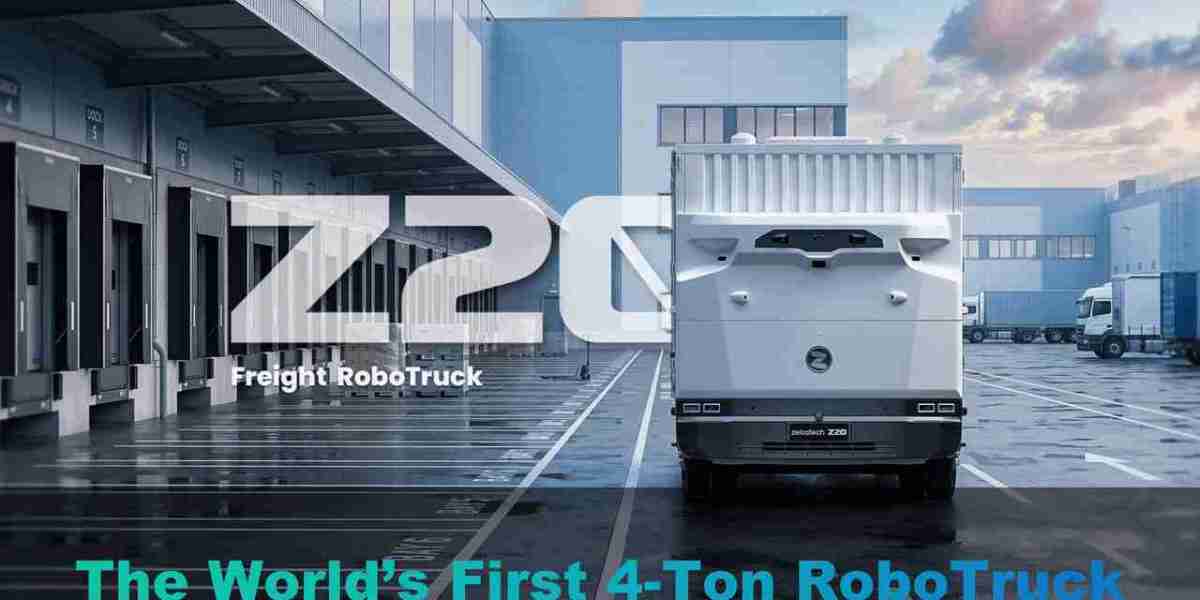
The value of autonomous vehicle is far more than liberating the driver's hands, it will also drive the optimization of the entire traffic ecology. When a large number of autonomous vehicle are connected to the unified vehicle road coordination network, real-time information can be exchanged between vehicles and between vehicles and road facilities, ahead of congestion, accidents, construction sections can be predicted in advance, and the speed and route can be adjusted independently. The traffic flow is no longer disorderly scrambled, the road efficiency can be significantly improved, and the energy consumption and exhaust emissions caused by congestion will also be reduced. For the vulnerable groups, autonomous vehicle have more special significance. The elderly and the disabled with mobility difficulties can get rid of their dependence on others' transportation, make their own travel plans, and have more space for activities and autonomy in life. In the freight transport scenario, autonomous vehicle also have a wide space. They can operate stably in the trunk logistics, park transfer and other scenarios, alleviate the pressure of long-distance drivers' high-intensity work, and reduce logistics transportation costs.
Of course, the popularity of autonomous vehicle also faces many practical problems. In addition to technical shortcomings, relevant laws and regulations, responsibility determination, data security, and ethical norms still need to be gradually improved. Once an accident occurs with an autonomous vehicle, the responsibility should be assigned to the car manufacturer, algorithm developer, or user. How to store and use massive road driving data, and how to protect user privacy, are all urgent issues that need to be discussed and agreed upon by society. At the same time, public acceptance also needs to be gradually cultivated. For a long time, people have been accustomed to controlling their own vehicles. To trust a set of machine systems, it requires longer practical verification and conceptual changes. Car companies should also standardize publicity, clarify the boundary between assisted driving and autonomous driving, avoid misleading users, and bury safety hazards.
Every revolution in the automotive industry is redefining transportation. From horse drawn carriages to fuel vehicles, and then to new energy vehicles, autonomous vehicle have started a new wave of change. It is not intended to completely replace the role of humans in transportation, but to use intelligent technology to fill the gaps in traditional transportation and build a more orderly and friendly travel environment. On the way forward, technology polishing, system supporting and social consensus need to be promoted simultaneously. When the technology is mature enough and the rules are complete enough, autonomous vehicle will truly integrate into daily life, so that travel is no longer a task requiring high tension, but a leisurely and comfortable journey, helping us move towards a new era of intelligent transportation that is more intelligent, green and safe.